


Lübnan-İsrail müzakereleri sonuçsuz kaldı

Tel Aviv, Hizbullah'ın yenilgisini kesinleştirmek için çaba gösteriyor

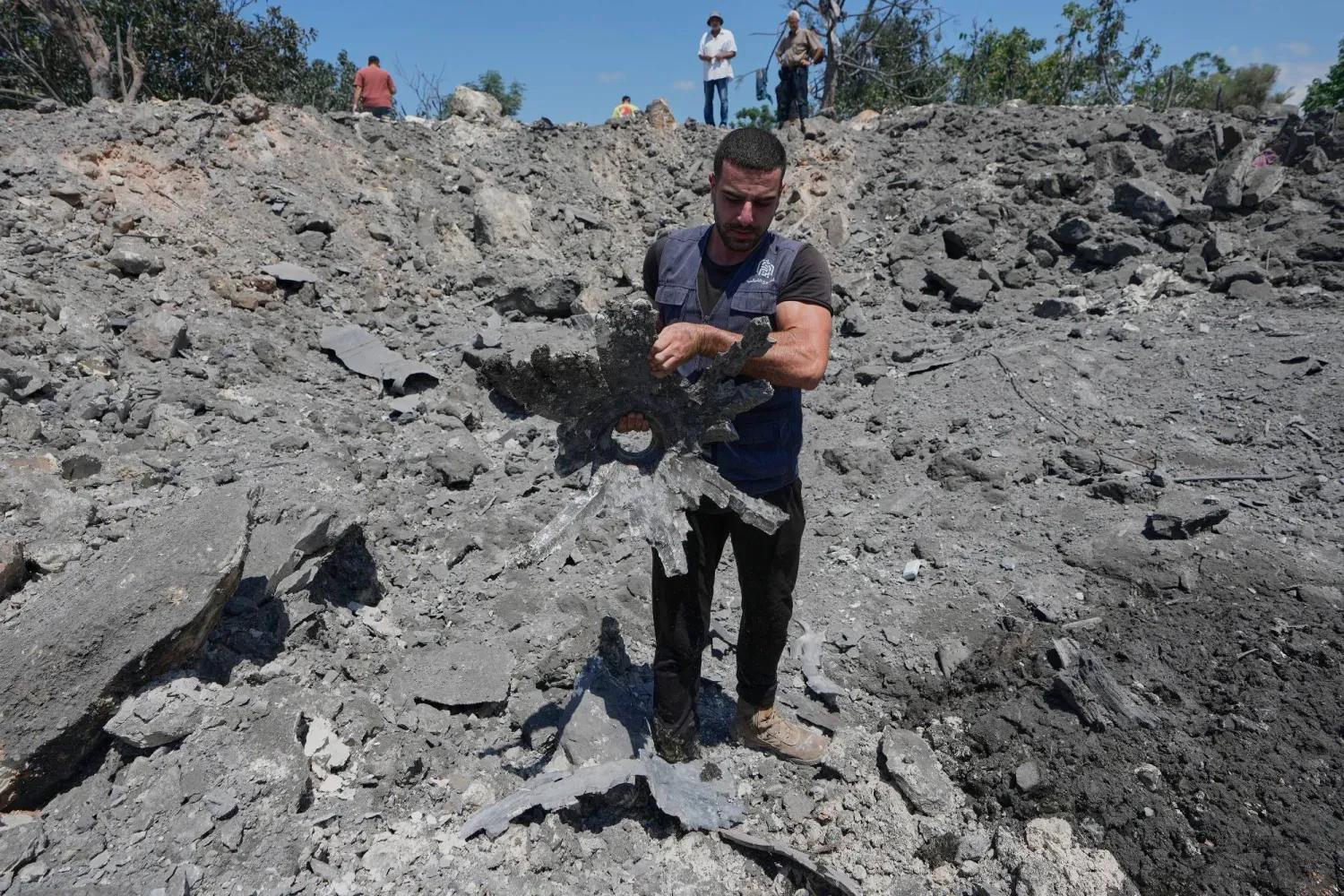
Lübnanlı bir kişi, 6 Ağustos 2026 Perşembe günü Lübnan'ın güneyindeki Burc eş-Şimali köyünde İsrail hava saldırısının oluşturduğu çukurda elinde bir şarapnel parçasıyla duruyor, (AP Fotoğrafı/Muhammed Zaatari)
TT

Lübnan-İsrail müzakereleri sonuçsuz kaldı

Lübnanlı bir kişi, 6 Ağustos 2026 Perşembe günü Lübnan'ın güneyindeki Burc eş-Şimali köyünde İsrail hava saldırısının oluşturduğu çukurda elinde bir şarapnel parçasıyla duruyor, (AP Fotoğrafı/Muhammed Zaatari)


Lübnanlı bir adam, Lübnan'ın güneyindeki Burc el-Şamali köyünde İsrail hava saldırısının açtığı kraterin içinde elinde bir şarapnel parçası tutuyor, 6 Ağustos 2026 Perşembe (AP-Mohammed Zaatari)

Beyrut: Caroline Akoum

Roma'da gerçekleştirilen Lübnan-İsrail müzakerelerinin 7. turu, herhangi bir ilerleme veya uzlaşma sağlanamadan sona erdi. Görüşmeler, İsrail'in Lübnan'ın güneyinde geniş çaplı askeri faaliyetlerini artırdığı bir zamanda yapıldı

Lübnan heyeti, "çerçeve anlaşmanın" uygulanmasına giriş noktası olarak ateşkesin kalıcı şekilde sağlanmasının ve İsrail güçlerinin aşamalı olarak çekilmesinin öncelikli olduğunu vurguladı.

Şarku’l Avsat’ın bilgi sahibi kaynaklardan aktardığına göre görüşmeler, askeri, siyasi ve hukuki olmak üzere üç ayrı başlık altında yürütüldü. Kara sınırları dosyası yeniden gündeme gelirken, esirler konusu da müzakerelerin önemli başlıklarından birini oluşturdu. Bu kapsamda siviller ile Hizbullah mensuplarının birbirinden ayrılması ve sürece Uluslararası Kızılhaç Komitesi'nin dahil edilmesi yönünde çalışmalar yürütüldü.

Görüşmelerde ayrıca "pilot bölgeler" konusu ele alınmaya devam etti. Lübnan'ın, İsrail'in Hayyam ve Bint Cübeyl önerilerini reddetmesinin ardından Zuvaytir eş-Şarkiyye beldesini gündeme getirmesine rağmen henüz bir anlaşmaya varılamadı.

Müzakerelerdeki tıkanıklığa paralel olarak İsrail, güney Lübnan'daki askeri operasyonlarını yoğunlaştırdı. İsrail'in bu hamlesinin, Hizbullah karşısında üstünlük sağlama stratejisinin devamı olduğu, askeri baskıyı sahada ve diplomatik süreçte kazanımlar elde etmek için kullanmayı amaçladığı değerlendiriliyor. Bu kapsamda yeni angajman kuralları ve sahada yeni güvenlik gerçeklikleri oluşturulmaya çalışıldığı ifade ediliyor.



إسرائيل تفتتح أول سفارة لها في سلوفينيا وسط احتجاجات مؤيدة للفلسطينيين

مئات المتظاهرين المؤيدين للفلسطينيين يتجمعون أمام مبنى السفارة الجديدة مطالبين بإغلاقها (رويترز)
TT

إسرائيل تفتتح أول سفارة لها في سلوفينيا وسط احتجاجات مؤيدة للفلسطينيين

مئات المتظاهرين المؤيدين للفلسطينيين يتجمعون أمام مبنى السفارة الجديدة مطالبين بإغلاقها (رويترز)

افتتحت إسرائيل أول سفارة لها في سلوفينيا، الأربعاء، في خطوة تعزز العلاقات مع الدولة الصغيرة العضو في الاتحاد الأوروبي، في وقت تتدهور فيه علاقاتها مع بعض حلفائها القدامى بسبب سياستها بشأن المستوطنات غير القانونية في الضفة الغربية المحتلة.

وسافر وزير الخارجية الإسرائيلي جدعون ساعر إلى ليوبليانا، عاصمة سلوفينيا، للمشاركة في المناسبة التي تعكس تحولا في سياسة سلوفينيا تجاه إسرائيل في ظل رئيس الوزراء اليميني الحالي يانيز يانشا.

ووصف ساعر افتتاح السفارة بأنه «يوم تاريخي» بعد اجتماعه مع نظيره السلوفيني توني كايزر. ووصف إسرائيل بأنها «الديمقراطية الوحيدة في الشرق الأوسط والشريك الحقيقي والصادق تقريبا الوحيد لأوروبا»، وفقا لوكالة الأنباء السلوفينية.

وقال ساعر: «علاوة على ذلك، نحن ندافع عن أوروبا وأمن أوروبا بشكل مباشر وغير مباشر»، مضيفا أن «إسرائيل هي الحصن الواقع على خط المواجهة للدفاع عن الحضارة الغربية».

وتجمع مئات المتظاهرين المؤيدين للفلسطينيين أمام مبنى السفارة الجديدة احتجاجا على الزيارة، مطالبين بإغلاق السفارة.

وقال كايزر: «نريد أن يمثل افتتاح السفارة اليوم بداية مرحلة من الحوار الأوسع، والتعاون الأقوى، وقبل كل شيء، تحقيق نتائج أكثر ملموسية لصالح شعبينا»، وفقا لمنشور لوزارة الخارجية على منصة إكس.

وتأتي الزيارة إلى سلوفينيا غداة حظر المملكة المتحدة التجارة مع المستوطنات الإسرائيلية في الضفة الغربية المحتلة، وإعلان فرنسا وكندا اعتزامهما اتخاذ إجراءات مماثلة. ويُنظر إلى هذه الخطوة باعتبارها تعبيرا رمزيا عن استياء بعض أقرب حلفاء إسرائيل من سياساتها، كما أنها تقدم مؤشرا جديدا على تزايد عزلة الحكومة الإسرائيلية نتيجة الحرب في غزة.

وردت إسرائيل بغضب، وقالت إنها ستغلق القنصلية البريطانية في القدس.


Abyan Governor to Asharq Al-Awsat: Forces Ready for ‘Zero Hour’ Against Houthis

Al-Rabash said security and development were top priorities. Photo: Turky Alagili
TT

Abyan Governor to Asharq Al-Awsat: Forces Ready for ‘Zero Hour’ Against Houthis

Al-Rabash said security and development were top priorities. Photo: Turky Alagili

Maj. Gen. Mukhtar al-Rabash al-Haythami, governor of Abyan and commander of the province’s military axis, said his forces were ready for the “zero hour” to launch an offensive against the Houthis in Yemen.

He disclosed plans and operations being coordinated with other military commands and fronts, as well as the reinforcement of the roughly 76-km (47-mile) front line between Abyan and al-Bayda with advanced weapons.

“The Abyan Military Axis is ready, both commanders and personnel, and is awaiting the zero hour,” al-Rabash told Asharq Al-Awsat in an interview.

He said the troops’ morale was “higher than ever” and that preparations were proceeding under a “carefully devised plan” in coordination with the Saudi-led coalition, Yemen’s Presidential Leadership Council and the Defense Ministry.

The Abyan governor said recent battlefield developments had demonstrated the government forces’ “fighting spirit and high morale,” adding that military commanders were united by the goal of “liberating Sanaa and Yemen from the Houthi militia and ending the Iranian project.”

Al-Rabash described cooperation with Saudi Arabia as a key pillar of plans to rehabilitate the province. He said a three-day workshop with the Saudi Development and Reconstruction Program for Yemen had identified eight priority sectors and approved 24 public-service projects.

76-km front line with the Houthis

Abyan’s fronts are spread across several military commands, al-Rabash said. The front line with the Houthis extends for about 76 km along the border with al-Bayda province and sees frequent clashes.

The governor said plans to reinforce the fronts included raising combat readiness, providing them with advanced weapons, and mobilizing local communities and tribes to support government forces.

Al-Rabash said the prospects of a decisive outcome had improved after the Houthis were “given opportunity after opportunity to pursue peace.”

Instead of taking advantage of those opportunities, he said, the group had continued to escalate domestically and threaten international shipping.

Houthi cells and assassination attempts

On security, al-Rabash said Houthi cells had been uncovered in the province, adding that security forces had arrested between 120 and 150 operatives over the past several years.

He said the latest Houthi cell to be uncovered consisted of two operatives who were arrested and four others who escaped.

According to al-Rabash, those detained confessed to preparing four explosive devices to target him personally, as well as plotting to attack Brig. Gen. Ahmed al-Damani, commander of the Nation’s Shield Forces in Abyan.

The governor said there was “collusion and coordination” between the Houthis and terrorist organizations. He added that local government officials and security and military commanders had been targeted in attempted attacks, while several security commanders had been killed in confrontations with those groups.

Al-Rabash said Abyan had paid a heavy price through a succession of conflicts, beginning with al-Qaeda’s seizure of parts of the province in 2011, followed by the Houthi advance in 2015 and the 2019 conflict between the internationally recognized government and Southern Transitional Council forces.

The fighting caused extensive damage to infrastructure, the social fabric and the local economy, he said.

Al-Qaeda’s presence in Abyan

Asked about al-Qaeda’s current presence, al-Rabash said the number of ideologically committed members of the organization had become “very small,” according to estimates by the relevant security agencies.

The threat remained, however, through clandestine cells and the recruitment of some misled young people by exploiting poverty and ignorance, he said.

Al-Rabash said some operatives came from other provinces, while others arrived “by sea from certain countries.” Abyan’s coastline, which stretches for more than 300 km (186 miles), poses a security challenge and requires significant surveillance capabilities, he added.

He stressed that security and military measures alone were insufficient and that combating extremism required a parallel approach encompassing education, public awareness, development and job creation, as well as the involvement of tribes and local communities.

“When citizens feel the state’s presence through schools, public services and job opportunities, they become less receptive to ideas that bring nothing but death and bloodshed,” he said.

24 Saudi-backed projects

On development, al-Rabash described cooperation with Saudi Arabia as a key pillar of plans to rehabilitate the province. He said a three-day workshop with the Saudi Development and Reconstruction Program for Yemen had identified eight priority sectors and approved 24 public-service projects.

The governor stated the Saudi Development and Reconstruction Program for Yemen approved 24 projects in Abyan (Local Authority)

The projects cover electricity, water, healthcare, education and roads, alongside larger strategic projects that are being developed, he said.

The governor placed the strategic Wadi Hassan dam at the top of Abyan’s priority projects, saying it would help replenish groundwater and the wells that supply Aden with water. The dam was also expected to help revive the agricultural sector.

Al-Rabash said Wadi Hassan had historically contributed to Abyan’s agricultural standing, which earned the province its reputation as “Yemen’s breadbasket.” Investment in modern agricultural technologies could restore that role and expand the province’s productive capacity, he added.

He praised Saudi support for Abyan and Yemen more broadly, particularly in hospitals, schools, electricity and roads, saying the projects “directly affect people’s lives.”

“We extend our thanks and appreciation to our brothers in the Kingdom of Saudi Arabia — its king, crown prince, government and people — for their countless efforts across various fields,” al-Rabash said.

He said Saudi support included “building hospitals and schools, rehabilitating roads, supporting the electricity sector and everything that helps improve the lives of the Yemeni people.”

The governor contrasted Saudi Arabia’s role with that of the Houthis.

“Our brothers in Saudi Arabia build hospitals, schools and roads, while the Houthis come with missiles to destroy them,” he said. “They kill and destroy but do not build, and their attacks have struck mosques, schools and hospitals.”

“Our Saudi neighbor and brother, with whom we share ties of blood, religion, tribe and geography, comes to help build and improve people’s lives,” he added. “That is the difference evident to anyone with insight.”

Al-Rabash said security and development were inseparable tracks, prompting the local authorities to adopt the slogan: “Abyan First — Authority Upheld, Development Built.” Photo: Turky Alagili

‘Abyan First’

Al-Rabash said security and development were inseparable tracks, prompting the local authorities to adopt the slogan: “Abyan First — Authority Upheld, Development Built.”

He said priorities were focused on five main sectors — electricity, water, healthcare, education and roads — alongside efforts to consolidate security, combat terrorism and crime, and raise combat readiness along the fronts.

The local authorities had also expanded outreach to tribes, religious scholars, journalists, young people, women, and social and sporting groups to build a community partnership, he said. The public’s response was among the most important factors in the success of the new phase.

Al-Rabash concluded with a message urging Abyan’s residents to “stand together and work as one,” saying the province’s stability and reconstruction “cannot be achieved without a genuine partnership between the community and the local authorities.”


Ankara Seeks to Take Saudi Economic Ties to ‘Higher Levels’

Türkiye looks to expand economic ties With Saudi Arabia (Asharq Al-Awsat)
TT

Ankara Seeks to Take Saudi Economic Ties to ‘Higher Levels’

Türkiye looks to expand economic ties With Saudi Arabia (Asharq Al-Awsat)

Saudi Arabia and Türkiye are recasting their economic relationship, moving beyond trade and traditional investment flows to forge long-term industrial partnerships spanning renewable energy, defense, tourism and logistics.

The emerging model combines Saudi capital with Turkish expertise and technology, with both countries pursuing joint investment, technology transfer and localized production to build ties that can outlast fluctuations in trade.

The shift is gathering pace as Saudi investors show greater interest in Turkish assets and companies through funds, mergers and acquisitions. At the same time, Turkish companies are expanding in Saudi Arabia, seeking to capitalize on the kingdom’s megaprojects and Vision 2030 targets.

Energy and defense lead the sectors poised for deeper cooperation. Both countries are working to build an economic relationship based on joint investment, technology transfer and industrial localization, a model designed to make the Saudi-Turkish partnership more sustainable and less exposed to swings in trade.

Ahmet Burak Dağlıoğlu, president of the Investment and Finance Office of the Presidency of the Republic of Türkiye, said Saudi investment in Türkiye had changed markedly in recent years.

Investors are showing greater interest in mergers and acquisitions, buying stakes in Turkish companies and investing through funds, he said. Saudi capital also remains active in banking, financial services, manufacturing, real estate and family-owned businesses.

Speaking to Asharq Al-Awsat at a meeting with reporters in Istanbul, Dağlıoğlu said Turkish companies were also expanding in the Saudi market, tapping opportunities created by Vision 2030 and the kingdom’s megaprojects, particularly in manufacturing, services, healthcare, hospitals and logistics.

The meeting was organized by the Turkish presidency’s Directorate of Communications and its Investment and Finance Office on the sidelines of a climate finance conference in Istanbul.

More confidence

Dağlıoğlu said the improvement in relations between Riyadh and Ankara in recent years had given investors in both countries greater confidence, putting trade and investment on an upward path.

Bilateral relations are an important signal for companies weighing market entry and long-term investment decisions, he said.

The true scale of Saudi investment in Türkiye could also be larger than official figures suggest, Dağlıoğlu said. Some investments are made through funds and companies registered in international financial centers, meaning they are not always recorded as direct Saudi capital inflows.

The pattern reflects an evolution in the tools used by Saudi investors, who increasingly rely on funds and international investment structures to acquire stakes in companies or finance mergers and acquisitions, he said.

Renewable energy

Dağlıoğlu pointed to Saudi Arabia’s ACWA Power entering Turkish renewable energy projects as a key example of where investment relations are heading.

The sector offers substantial opportunities, he said, as Türkiye seeks to expand its clean-energy capacity and Saudi companies bring advanced expertise in developing, financing and operating major projects.

Dağlıoğlu cited investment commitments involving large-scale renewable energy projects and said further steps were expected to be announced as Türkiye prepares to host the COP31 United Nations climate conference in Antalya.

Energy could become a central pillar of the partnership, he said, as Saudi Arabia expands its international investments in renewable energy and Türkiye seeks to increase the share of clean energy sources in its energy mix.

Defense cooperation

Muttalip Tütüncü, secretary-general of the SAHA Istanbul defense and aerospace industry cluster, said defense cooperation between Saudi Arabia and Türkiye was moving beyond product sales and export deals.

The relationship is developing into a strategic partnership encompassing technology transfer, industrial localization and joint production capabilities, he said.

Saudi Arabia’s drive to localize defense manufacturing aligns with the industrial and technological capabilities Türkiye has built in recent years, opening the door to broader cooperation between companies and institutions in both countries.

Saudi Arabia is not merely seeking to buy defense equipment and systems, Tütüncü said. It also wants to acquire the technical knowledge and capacity to manufacture, develop and maintain them, in line with its targets for increasing local content in military industries.

“Turkish companies view the Saudi market as a long-term strategic partner, not merely as an export market,” he said.

Future cooperation could include joint manufacturing, technology transfer, workforce training and the creation of local supply chains, Tütüncü added.

He described the defense relationship as one of “industrial integration,” combining Saudi financial and investment capabilities with Turkish technical and industrial expertise.

That model could extend to aviation, unmanned systems, electronics and advanced technologies, he said.

Drone agreements between the two countries marked an important milestone in defense cooperation, Tütüncü said, but they were not the end of the process. Rather, they were the start of a broader phase that could include building industrial and production capabilities inside Saudi Arabia.

Seasonal tourism integration

In tourism, Dağlıoğlu said the two countries could build a model of seasonal integration.

Türkiye attracts large numbers of Saudi tourists during the summer, while Turkish companies and operators could benefit from Saudi Arabia’s winter tourism season and the kingdom’s new tourism and entertainment projects.

Turkish hospitality operators and tourism service companies could deploy their expertise and personnel in the Saudi market during periods of lower demand in Türkiye, helping meet the needs of Saudi projects while creating new opportunities for Turkish businesses.

Cooperation between Riyadh and Ankara is not limited to governments and large corporations, Dağlıoğlu said. It also involves connecting investors, entrepreneurs and small and medium-sized enterprises and making it easier for them to enter both markets.

Greater growth

The two Turkish officials expect mutual investment to grow further in the coming period, driven by improving relations, the expanding scale of Saudi projects and Saudi investors’ interest in Turkish assets and companies.

Ankara’s push to attract high-quality investment into industry, energy and technology is also expected to support that growth.

The course signals a shift in Saudi-Turkish relations: from rebuilding trade momentum to forging deeper economic and industrial interests based on joint investment, technology transfer and complementary capabilities.

That shift gives the relationship a more enduring foundation — one that extends beyond the fluctuations of traditional trade.