


İtalya Dışişleri Bakanı: Suriye ile AB arasında köprü olmaya çalışıyoruz

TT

İtalya Dışişleri Bakanı: Suriye ile AB arasında köprü olmaya çalışıyoruz

İtalya Dışişleri Bakanı: Suriye ile AB arasında köprü olmaya çalışıyoruz

Suriye'deki yeni yönetimin lideri Ahmed eş-Şera ve Dışişleri Bakanı Esad Hasan eş-Şeybani, Dışişleri Bakanı Antonio Tajani başkanlığındaki İtalyan heyetini kabul etti.

Tajani, ülkesinin Suriye ile Avrupa Birliği (AB) arasında bir köprü olmaya çalıştığını vurguladı.

Suriyeli mevkidaşı eş-Şeybani ile birlikte Şam'da düzenlenen ortak basın toplantısında konuşan Tajani, “İtalya ile Suriye arasında ekonomik iş birliği başlatmak istiyoruz. Suriye'de yatırım yapmak isteyen İtalyan şirketlerinden olumlu mesajlar alıyoruz ve ilgili bakanlıklar aracılığıyla daha fazla adım atılmasını istiyoruz. Suriye'ye uygulanan yaptırımlar ülkenin toparlanmasının önünde bir engel teşkil ediyor” ifadelerini kullandı.

Tajani sözlerini şöyle sürdürdü: “Suriye halkı İtalya'ya güvenebilir. Biz, onlarca yıldır acı çeken Suriye ile yeni bir sayfa açacağız. Yeni Suriye yönetiminin attığı adımlar cesaret verici. Doğru yönde ilerlediklerini düşünüyorum. Görüşmelerimiz sırasında başta uyuşturucu kaçakçılığı olmak üzere suç faaliyetlerinin takip edilmesi gerektiğine odaklandık.”

csdfvgrt
Suriye'deki yeni yönetimin lideri Ahmed eş-Şera, İtalya Dışişleri Bakanı Antonio Tajani ile bir araya geldi. (Reuters)

Tajani, “Suriye'nin toprak bütünlüğünün korunmasını vurguluyor ve ülkelerinde onurlu, özgür ve diktatörlükten uzak bir şekilde yaşamak için her türlü hakka sahip olan tüm Suriye vatandaşlarının güvenli bir şekilde ülkelerine dönmelerini teşvik ediyoruz. İtalya üzerine düşeni yapmaya hazırdır ve reformlarla karakterize edilen yeni bir aşamayı teşvik etmektedir” şeklinde konuştu.

Suriye Dışişleri Bakanı eş-Şeybani ise ülkesinin Suriye'nin bir istikrar, refah ve barış modeli olabilmesi için yeni bir sayfa açtığını vurguladı. Eş-Şeybani, “Suriyeli mültecilerin onurlu ve güvenli bir şekilde geri dönmelerini sağlayacak koşulları yaratmak için çalışıyoruz. Yakında Avrupa ülkelerini ziyaret etmek üzere bir tura çıkacağım ve herkes için adaleti tesis etmek üzere ulusal bir kongreye doğru ilerliyoruz” dedi.

Eş-Şeybani sözlerini şöyle noktaladı: “Tüm Suriyelileri bir araya getirecek, bir sonraki aşamanın şekillenmesini sağlayacak ve herkesin katıldığı yumuşak bir geçişi temin etmek üzere geçiş dönemi adaletini sağlayacak, türünün ilk örneği olan bir Suriye kongresine hazırlık çalışmaları devam ediyor.”

xcdvfg
Suriye Dışişleri Bakanı Esad Hasan eş-Şeybani, Şam'da İtalya Dışişleri Bakanı Antonio Tajani ile bir araya geldi. (Reuters)

Esed'in devrilmesinin ardından aralarında Fransa ve Almanya dışişleri bakanlarının da bulunduğu Batılı yetkililer ve heyetler, Suriye’deki yeni yönetimin lideri Ahmed eş-Şera ile görüşmek üzere Şam'a gitti.

İngiltere ve ABD dışişleri bakanları da Şam'daki yeni yönetimle temaslarda bulunduklarını açıkladılar.
Al-Zaidi’s First Visit to Egypt... A Boost to Cooperation Amid Regional Turmoil

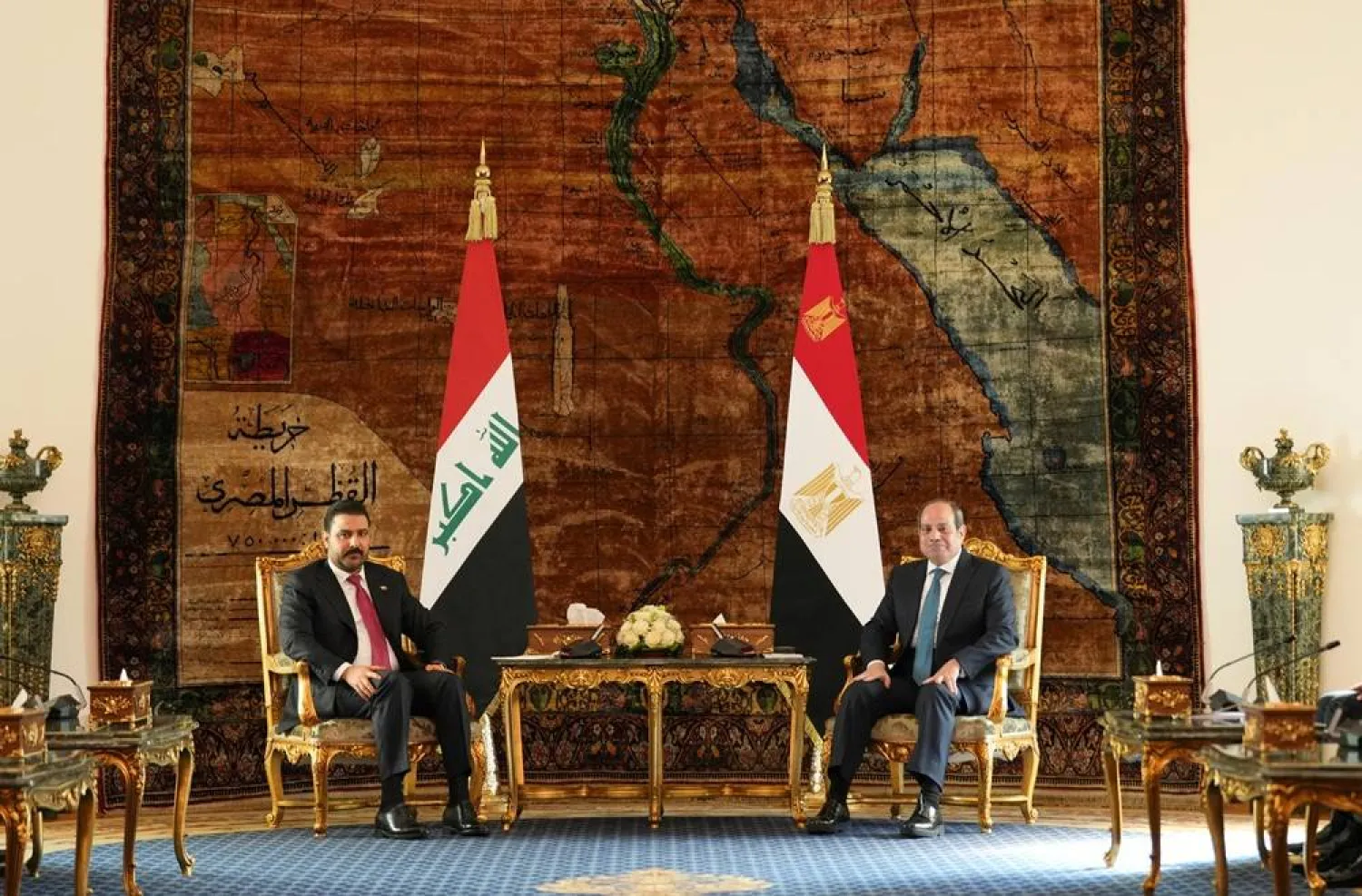
Iraqi Prime Minister Ali al-Zaidi meets Egypt's President Abdel Fattah al-Sisi, in Cairo, Egypt, November 23, 2026. (Iraqi Prime Minister's Media Office/Handout via Reuters)
TT

Al-Zaidi’s First Visit to Egypt... A Boost to Cooperation Amid Regional Turmoil

Iraqi Prime Minister Ali al-Zaidi meets Egypt's President Abdel Fattah al-Sisi, in Cairo, Egypt, November 23, 2026. (Iraqi Prime Minister's Media Office/Handout via Reuters)

Iraqi Prime Minister Ali al-Zaidi kicked off on Monday a visit to Egypt - his first since taking office in May - amid escalating regional challenges, in a move experts and analysts described as a boost to cooperation and coordination in light of regional tensions.

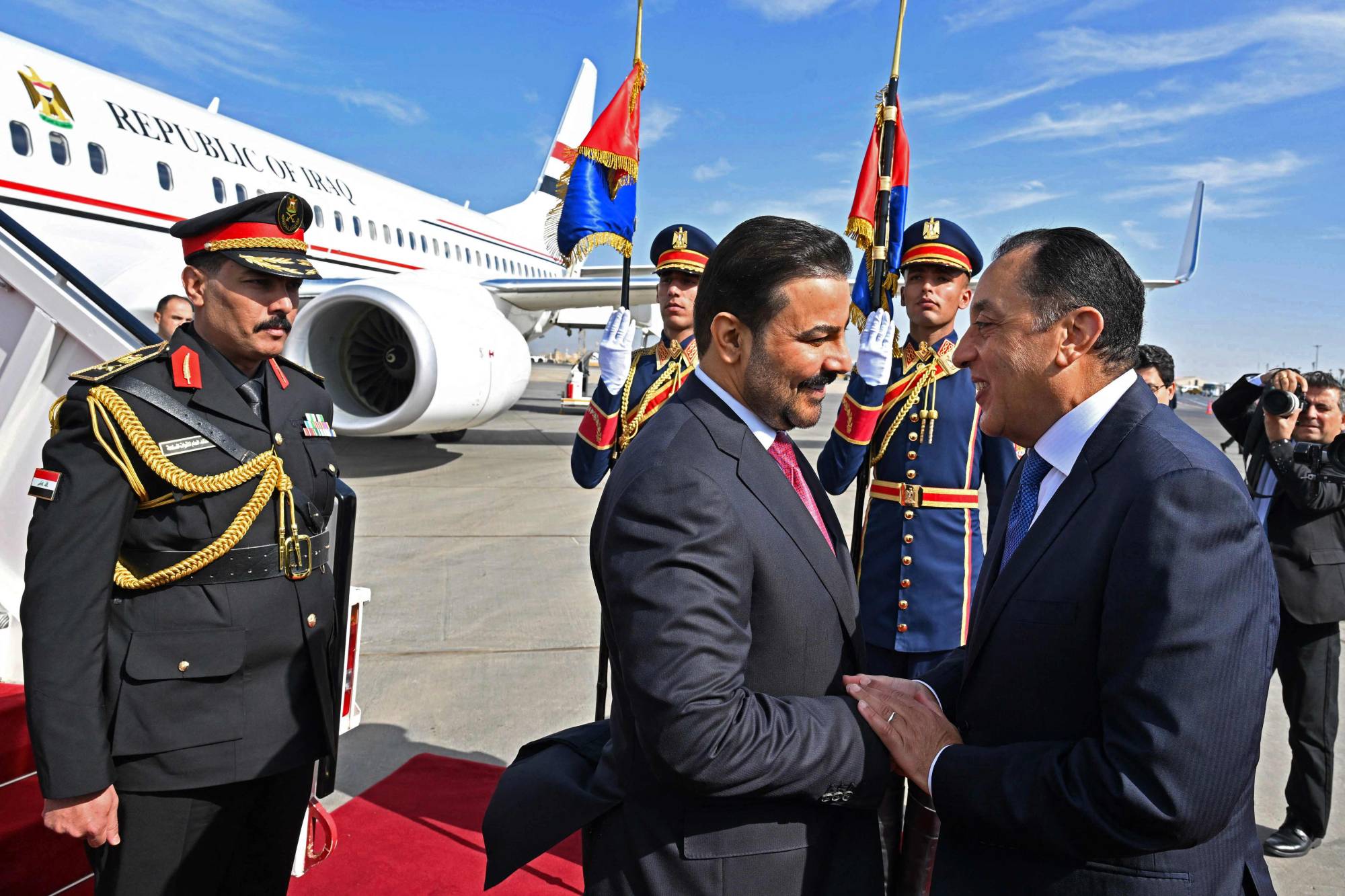
Egyptian Prime Minister Mostafa Madbouly received al-Zaidi at Cairo International Airport before he met with Egyptian President Abdel Fattah al-Sisi.

On Monday evening, al-Zaidi and Madbouly are co-chairing the fourth session of the Joint Higher Committee between the two countries at the government headquarters in the New Administrative Capital.

In a statement, the Egyptian Cabinet said the two sides will witness the signing of several documents across various fields "supporting the enhancement of bilateral cooperation between the two brotherly countries," in addition to attending a business forum to review trade and investment opportunities in both nations.

The visit comes "as both countries seek to open new horizons for joint cooperation, particularly in light of the promising opportunities abundant in Egypt and Iraq across various economic, commercial, and investment fields, with a view to deepening the partnership between the two countries,” it added.

A day earlier, Egyptian Foreign Minister Dr. Badr Abdelatty met his Iraqi counterpart Fuad Hussein on the sidelines of the Aswan Forum, saying he was looking forward to al-Zaidi's visit and the convening of the fourth session of the Joint Higher Committee.

He noted that the visit would give strong momentum to bilateral ties, bolster cooperation across various sectors, and serve the mutual interests of Egypt and Iraq.

The FMs stressed the importance of prioritizing political and diplomatic solutions to resolve crises, and maintaining coordination and consultation on issues of mutual concern to support efforts aimed at achieving regional security and stability.

Region in focus

Al-Zaidi’s first visit to Egypt centers on the regional developments and tensions across the Middle East. His media office said in a statement on Monday that al-Zaidi will discuss ways to confront various challenges in a manner that strengthens regional security and stability.

According to an Egyptian presidential statement, the PM expressed during his meeting with Sisi his appreciation for Egypt’s efforts aimed at easing regional tensions and preserving stability.

He underlined Iraq’s desire to intensify political consultation to prevent renewed regional escalation.

Egypt's Prime Minister Mostafa Madbouly (R) shakes hands with his Iraqi counterpart Ali al-Zaidi upon his arrival at the airport in Cairo on November 23, 2026. (AFP)

On bilateral cooperation, the two sides discussed ways to deepen joint collaboration in energy, investment, trade, and military cooperation.

Sisi reaffirmed Egypt’s steadfast position in support of the security and stability of all Arab countries, saying their security is an extension of Egyptian national security.

He highlighted Egypt’s persistent efforts to resolve ongoing regional crises.

Significance of the visit

Mohammed Hegazy, a member of the Egyptian Council for Foreign Affairs and former assistant foreign minister, said al-Zaidi's visit reflects growing Iraqi recognition of the importance of revitalizing relations with its Arab neighborhood.

Speaking to Asharq Al-Awsat, he added that Iraq, by virtue of its geographical and political standing, as well as its economic weight and resources, "cannot remain detached from the equations of security and stability in the region.”

“Cairo is a key Arab partner for Baghdad with extensive political and diplomatic experience and the ability to engage with various regional and international actors,” he went on to say.

Al-Zaidi’s first visit reflects "a desire to elevate the relationship from routine political coordination to a deeper, more sustainable partnership, and to move toward a policy grounded in national interests, balance, and strengthening the Arab presence in confronting current challenges,” he added.

He noted that Egypt and Iraq have a significant opportunity to expand cooperation, "but its success hinges on moving from agreements and memoranda of understanding to concrete projects with measurable results."

Hegazy believes this momentum should be built upon by identifying priority projects, while expanding opportunities for cooperation in electricity, electrical interconnection, the exchange of expertise in the oil and gas sector, and renewable energy projects.

Egyptian-Iraqi trade exchange reached roughly $1.1 billion in 2024, according to official Egyptian figures.

Hegazy said this remains well below available potential, and therefore the objective should not merely be increasing trade volume, but diversifying it and boosting investment.


Lebanon: Number of Detainees in Al-Qaa Explosives Case Rises to Six

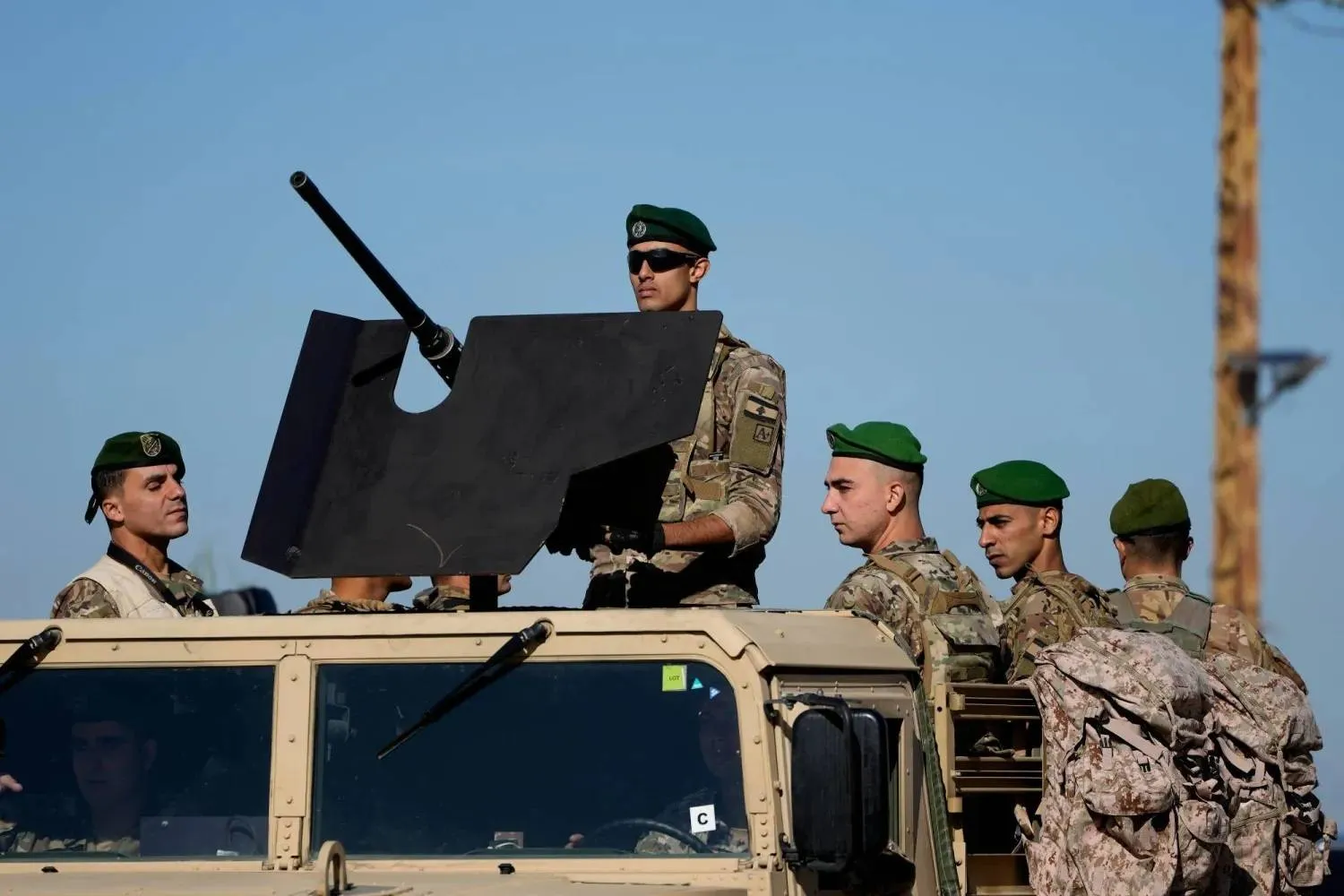
Lebanese soldiers deployed in southern Lebanon. (AP file)
TT

Lebanon: Number of Detainees in Al-Qaa Explosives Case Rises to Six

Lebanese soldiers deployed in southern Lebanon. (AP file)

The number of detainees held in connection with the explosives shipment arriving from Syria, which the Lebanese Army seized in the Mashari al-Qaa area of the Bekaa Valley on Sunday, has risen to six Lebanese nationals.

Security agencies are tracking down two Syrians suspected of having been set to receive the cargo.

Government Commissioner to the Military Court Judge Claude Ghanem ordered the preliminary investigation transferred from the Military Police to the Army's Intelligence Directorate in order to expand the probe and identify the party for which the shipment was intended.

The number of detainees will likely rise as the investigation unfolds.

A judicial source told Asharq Al-Awsat that preliminary information indicates the two Syrians "were supposed to handle transporting the explosives to warehouses in the Bekaa," noting that their arrest is expected to help "uncover the identity of the recipient."

The source confirmed that Judge Ghanem "requested that samples of the seized TNT and C-4 be sent to laboratories for analysis, in an effort to determine their origin and compare them with samples from the Dahr al-Baidar shipment."

He pointed to "similarities between the materials seized in both shipments, with tests awaited to determine whether they are identical."

The Lebanese Army's announcement on Sunday regarding the seizure coincided with a statement by Syrian security forces reporting the confiscation of a cache of weapons in the Damascus countryside that they said was destined for smuggling into Lebanon.

The Lebanese Army had previously intercepted roughly 200 kilograms of explosives near the Syrian border in the Lebanese area of al-Qasr, while the person transporting them fled toward Syria.

A security source told Asharq Al-Awsat that repeated seizures along the eastern and northern borders "call for strengthening field measures and maintaining continuous coordination between Lebanon and Syria to close the loopholes threatening the security of both countries."

The security source stressed "the need to raise the readiness of security agencies to thwart smuggling operations before shipments reach their destinations."


Israel Defense Minister Says Police, Not Army, Should Handle Settler Violence

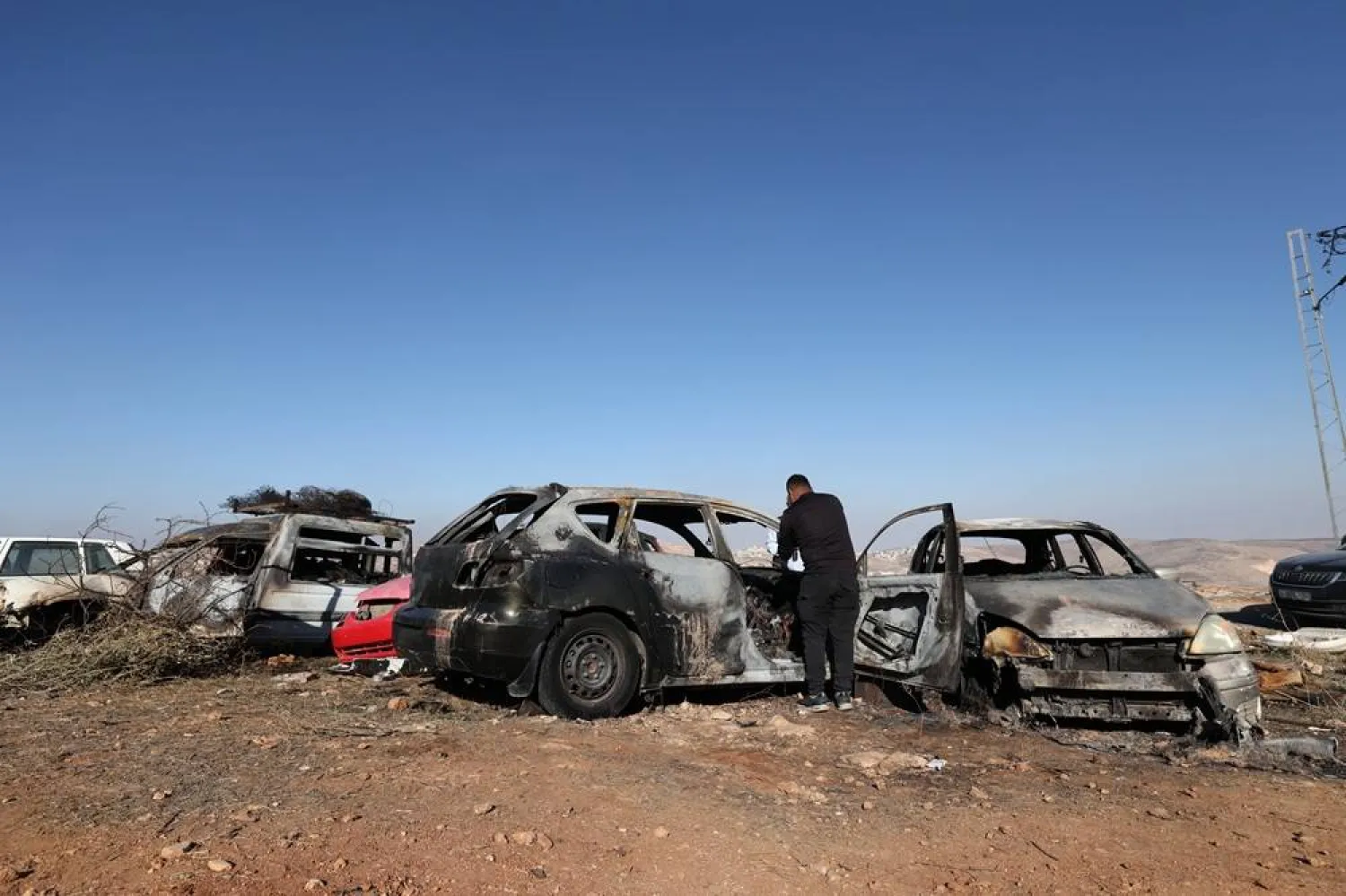
Palestinians inspect the damage after Israeli settlers set fire to their cars at the West Bank village of Kufr Malik, 22 November 2026. (EPA)
TT

Israel Defense Minister Says Police, Not Army, Should Handle Settler Violence

Palestinians inspect the damage after Israeli settlers set fire to their cars at the West Bank village of Kufr Malik, 22 November 2026. (EPA)

The defense minister in Israel's caretaker government on Monday said the police, not the military, should deal with violent settlers in the occupied West Bank, after Palestinian vehicles and properties were torched over the weekend.

It is not the first time Israel Katz, who serves in the right-wing caretaker government of Benjamin Netanyahu, has spoken about transferring civilian law enforcement over West Bank settlers to the police.

If implemented, the measure could constitute a step towards Israeli annexation of the Palestinian territory.

On Monday, Katz called the "ongoing violence by a handful of rioters... extremely serious in every respect."

The military "should not and cannot deal with civilian law enforcement over the Jewish population in Judea and Samaria" he added, using the biblical name for the West Bank, which Israel has occupied since 1967.

"Therefore, in accordance with my directive, the army has formulated a plan to transfer responsibility for civilian criminal enforcement in the territories to the Israel Police, which will be reinforced and prepared accordingly," Katz said.

"Only in this way will it be possible to normalize reality in Judea and Samaria and enable the settlements to flourish and prosper," he added.

Katz made a call to transfer law enforcement in August, during a siege of Palestinian homes in the northern West Bank, saying the police would "prepare and establish an appropriate force to handle civil matters".

His statement on Monday comes after Israeli authorities said they were investigating the torching of Palestinian vehicles and property in four West Bank villages over the weekend.

Social media posts showed vehicles in flames as well as slogans written on walls, including: "In blood and fire Judea has fallen, in blood and fire Judea will rise again".

At a conference on Monday, Israeli President Isaac Herzog said "violence by Jewish extremists against innocent people... is despicable and deserves strong condemnation," insisting that law enforcement was working "to scour this terrible moral stain".

Violence in the West Bank, occupied by Israel since 1967, has surged since Hamas's October 7, 2023 attack on Israel, which triggered the Gaza war.

More than 500,000 Israelis live in West Bank settlements, which are illegal under international law, in a territory home to around three million Palestinians.