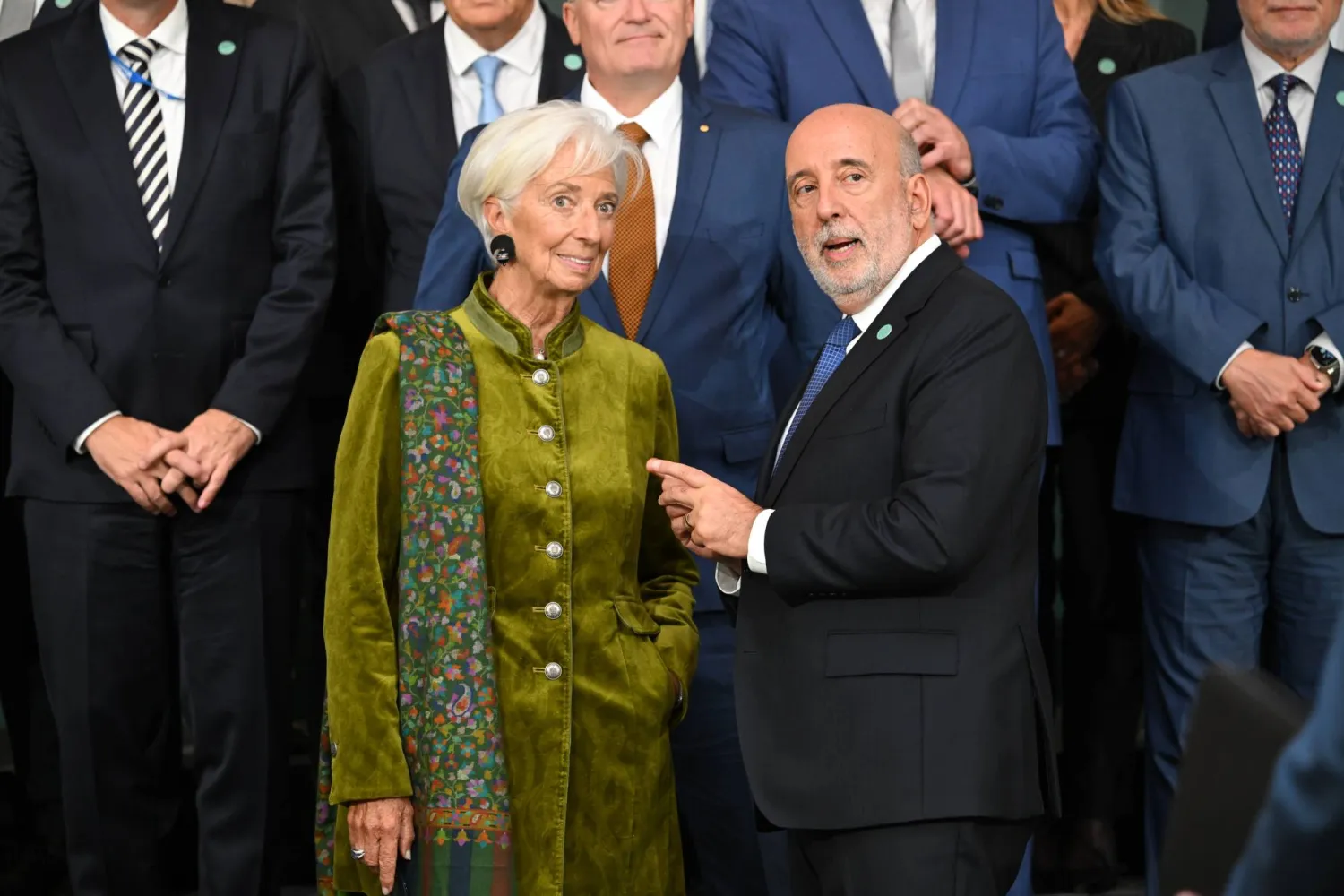
European Central Bank will have to raise interest rates again if high energy prices feed through to other areas but so far there is no sign of such second-round inflation effects, ECB policymaker Gabriel Makhlouf said on Wednesday.
"Although inflation is above our target, we're not seeing the sorts of second round effects that start feeding through to prices," Makhlouf, Ireland's central bank chief, told national broadcaster RTE in an interview.
"If that happens (energy prices remain high and feed into other areas), we will have to take action again to meet our target."
Makhlouf cautioned earlier this month following the ECB's second interest rate hike this year that raising interest rates "a great deal more" risked damaging economic growth.
Also Wednesday, the ECB said the European Union could close a third of its productivity gap with the United States if it had as many large companies, adding its voice to calls for reforms that make it easier for businesses to scale up.
European policymakers are trying to tackle the EU's economic underperformance relative to the United States, which is home to many of the world's largest companies and is leading the race to develop artificial intelligence.
EU workers produce 20% less output per hour than their US counterparts, according to academic studies. They were almost on an even keel in 1995.
ECB staff found that if Europe had the same distribution of large and small firms as the United States – without changing how productive each type of company is – the productivity gap would shrink by roughly one-third.
Large firms are significantly more productive than smaller ones. Companies with at least 250 employees generate an average of €86,800 in value added per worker annually, while firms with fewer than 10 employees produce less than half that amount.
The ECB said Europe's weaker productivity performance also reflects lower innovation, fragmented regulation and less developed capital markets, all of which make it harder for companies to grow and compete internationally.
The central bank backed the proposed "EU Inc" framework, an EU-wide corporate law regime aimed at reducing barriers to cross-border business activity.
Modelled loosely on Delaware's corporate framework in the United States, EU Inc would create a single legal structure operating across the bloc, bypassing a patchwork of 27 national company law systems and dozens of corporate forms.
"EU Inc. has the potential to support the Single Market, by strengthening competition, innovation and productivity growth," the ECB said.