Trump, bronzlaştırıcısı fark ediliyor diye pandemide maske takmamışhttps://turkish.aawsat.com/4562246-trump-bronzla%C5%9Ft%C4%B1r%C4%B1c%C4%B1s%C4%B1-fark-ediliyor-diye-pandemide-maske-takmam%C4%B1%C5%9F
Trump, bronzlaştırıcısı fark ediliyor diye pandemide maske takmamış
Trump pandemi boyunca maske takmayı defalarca reddetmiş ve virüsün tehlikeli etkilerini küçümsemişti
Trump, bronzlaştırıcısı fark ediliyor diye pandemide maske takmamış
(Reuters)
Mark Meadows'un eski yardımcısı Cassidy Hutchinson, yeni kitabında eski ABD Başkanı Donald Trump'ın maske kayışlarında bronzlaştırıcısı fark edildiği için Kovid-19 ağız maskesi takmayı reddettiğini öne sürüyor.
The Guardian'a göre Hutchinson, Mayıs 2020'de, Dünya Sağlık Örgütü'nün Kovid-19 pandemisi ilanından sadece iki ay sonra, eski başkanın maske üreten bir Honeywell fabrikası ziyaretinde yaşanan olayı anlattı.
Şirketin Paul McCartney'in Live and Let Die şarkısının bir cover'ını çaldığı bu ziyarette Trump, tesisteyken maske takmamıştı.
Dönemin ABD Başkanı "bir süreliğine maske taktığını" ancak kendisine maskeye ihtiyacı olmadığını söyleyen "Honeywell'in başındaki kişiyle" konuştuktan sonra maske takmadığını söyledi.
Ancak Hutchinson hikayenin farklı bir versiyonunu anlattı. Trump "beyaz bir maskede karar kıldı" ve sonra çalışanlara bu konuda ne düşündüklerini sordu.
Hutchinson "Başımı yavaşça salladım" diye hatırlıyor.
Başkan maskeyi çıkardı ve neden takmaması gerektiğini düşündüğümü sordu.
Hutchinson, N95 maskesinin kayışlarını göstererek, Trump'tan da kendi kayışlarına bakmasını istemiş. Böylece Trump, kayışların "bronzlaştırıcıyla kaplı olduğunu görmüş".
"Neden kimse bana bunu söylemedi?" diye sormuş.
Bunu takmayacağım.
"Basın onu maske takmadığı için eleştiriyordu" yazan eski yardımcı, "kibrinin derinliğinin maskeleri reddetmesine neden olduğunu bilmiyorlardı ve sonrasında milyonlarca destekçisi de aynı şeyi yaptı" diye belirtti.
Trump pandemi boyunca maske takmayı defalarca reddetmiş ve virüsün tehlikeli etkilerini küçümsemişti.
Eski başkan ayrıca dezenfektanların koronavirüsü tedavi edebileceğini öne sürmek gibi virüsle ilgili birçok komplo teorisi de ortaya atmıştı.
Trump, virüse yakalanıp iyileştikten sonra "İyileştiğinizde bağışıklık kazanıyorsunuz" demiş ve bağışıklığının "koruyucu parıltısıyla" övünmüştü.
Effective Altruism: The Philosophy Behind Silicon Valley's AI Fears
Effective Altruism conspicuously connects a number of leaders in American tech and finance. ANDREJ IVANOV / AFP
Dario Amodei says he is not part of it. But the Anthropic chief's personal and professional circle is entwined with Effective Altruism (EA), a philanthropic movement that has become one of the most contested ideas in Washington and Silicon Valley.
To its proponents, EA is a rational, evidence-based way to do good. To many in the Trump administration, it fuels unfounded and exaggerated fears about artificial intelligence -- the kind of warnings Amodei has become known for.
Here are some facts about EA:
- Philosophical roots -
EA is a loosely defined movement that uses evidence and reason to work out how to do the most good with a person's money and time.
Its intellectual roots can be traced to Australian philosopher Peter Singer.
If reasonable people would agree it is morally right to ruin one's clothes to save a drowning child, he argued in 1972, they should also sacrifice greater resources and comforts to save lives in foreign lands -- because the distance should not matter.
The idea took hold among wealthy donors who felt a moral obligation to give, but wanted their money to do as much good as possible.
- Giving what you can -
EA took shape as a decentralized movement during the heady, techno-optimistic days of the late 2000s and early 2010s -- when many believed social media and smartphones would promote empathy and democracy.
In 2007, financial professionals Holden Karnofsky and Elie Hassenfeld quit their jobs to launch GiveWell, which produced data-driven analyses of charities' effectiveness.
Karnofsky was once Amodei's roommate, and is now married to his sister Daniela, who co-founded Anthropic with him.
Two years later, Oxford University philosophers William MacAskill and Toby Ord launched "Giving What We Can," encouraging people to donate at least 10 percent of their income to tackling global poverty.
"The critique of the status quo was that existing attempts to evaluate the work of charities and nonprofits focused on things like overhead and executive pay," Theodore Lechterman, a philosophy professor at IE University in Madrid, told AFP.
GiveWell and others wanted to ask, "How much good is this organization actually doing in the world?" Lechterman said.
EA's three big causes today are global poverty, factory-farmed animals and "the most controversial one -- global catastrophic risk," said Richard Chappell, a professor at University of Miami and an EA proponent.
That worry about the future is where AI comes in.
- Data-driven -
Over the last 15 years, EA has found eager followers in American tech and some corners of Wall Street.
"Since the movement is data driven, it's a relatively easier sell to people who...make decisions on the basis of data," Lechterman said.
That numbers-backed thinking means engineers, software developers or entrepreneurs might all find it more appealing than humanities graduates, Lechterman said.
Among them was Sam Bankman-Fried, the crypto-finance wunderkind sentenced in 2024 to 25 years in prison for fraud.
A vocal champion of the movement, Bankman-Fried said he went into finance to make a fortune he could give away.
He also was an early investor in Anthropic.
- EA and AI -
As AI worries grew, EA philosophers such as MacAskill were "kind of thinking about the future of humanity," said Brian Berkey of the University of Pennsylvania.
The result was long-termism, a philosophy that "came to play a very central role" in the movement.
MacAskill reportedly brokered contacts between Bankman-Fried and Elon Musk.
Musk was for years outspoken about the threat he believed AI posed to humanity, and in 2015 helped create OpenAI to guard against it.
EA's focus on AI also owes much to a neighboring movement, rationalism -- an online community that grew up around writer Eliezer Yudkowsky, who has warned since the 2000s that superintelligent AI could wipe out humanity.
The two movements overlap heavily in membership and ideas, sharing an emphasis on reasoning through evidence and probabilities, and a conviction that preventing human extinction should be a top priority.
Both converged last month on Jacob Coxon, a 27-year-old researcher who quit Anthropic warning that AI companies were "gambling with our lives." His post was viewed more than 100 million times.
Days later, Amodei published a lengthy essay arguing that AI's mounting risks warranted a slowdown.
When the World Saw van Gogh as ‘a Madman,’ she Saw his Geniushttps://turkish.aawsat.com/node/5325024
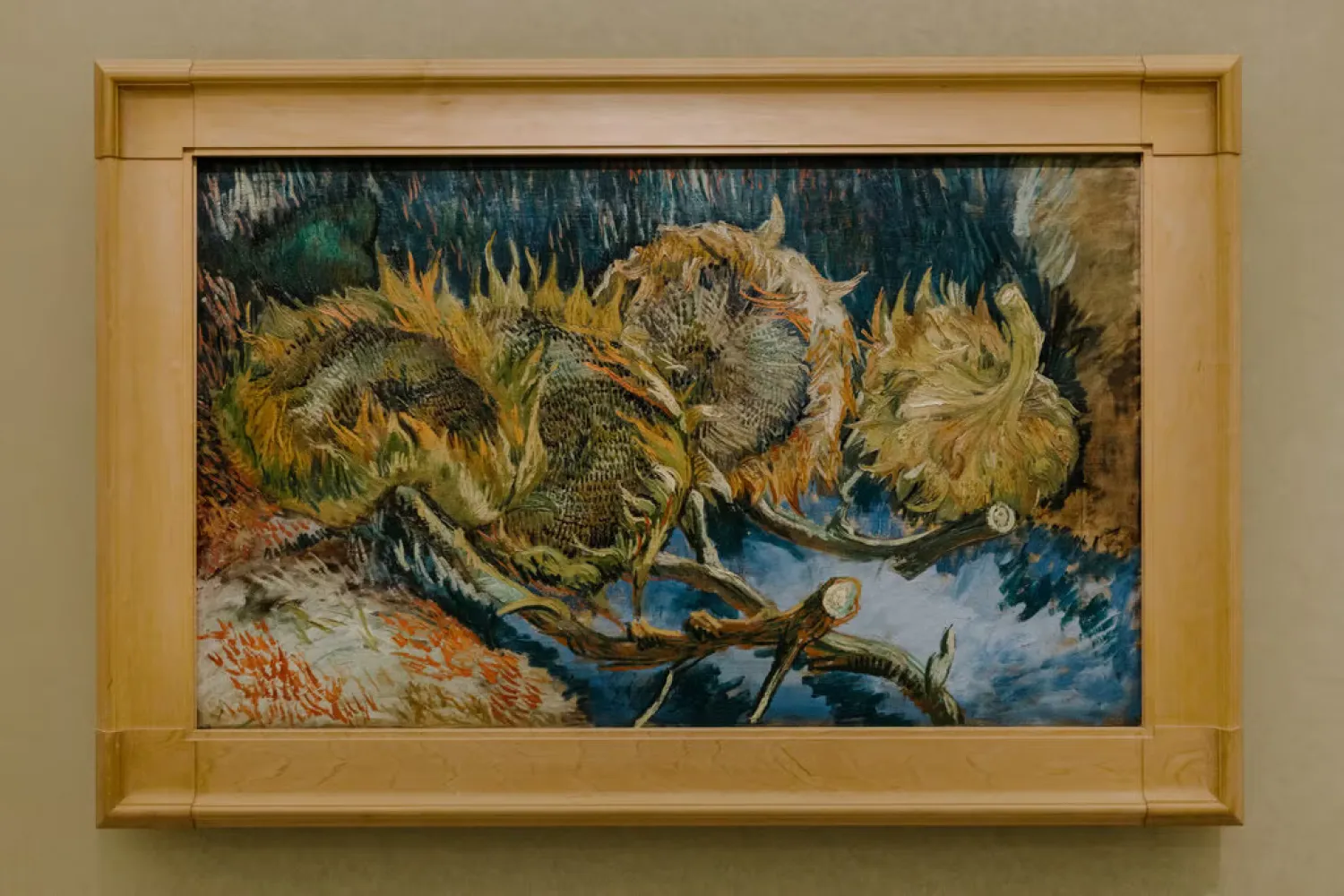
“Four Sunflowers Gone to Seed” Credit...Ilvy Njiokiktjien for The New York Times
TT
TT
When the World Saw van Gogh as ‘a Madman,’ she Saw his Genius
“Four Sunflowers Gone to Seed” Credit...Ilvy Njiokiktjien for The New York Times
By Nina Siegal
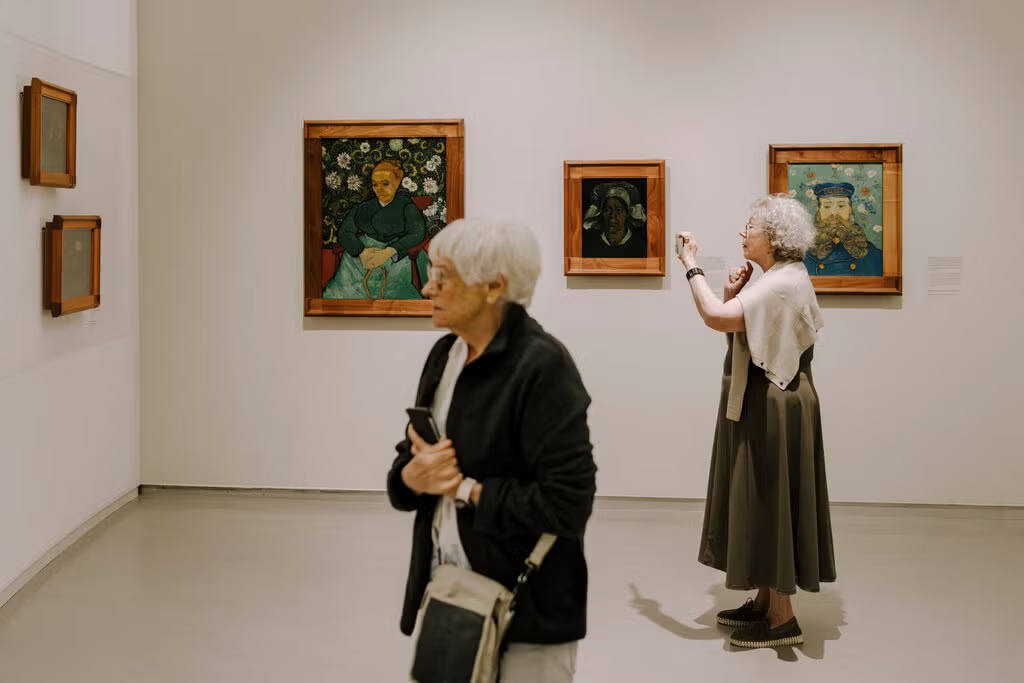
It was April 1912, and Helene Kröller-Müller was on a shopping spree. She wasn’t interested in the latest shoes or fashions. She was on the hunt for Vincent van Gogh’s portrait of Madame Augustine Roulin.
She managed to find “La Berceuse,” as the painting is known, at a Paris gallery, and bought it on the spot. The next day, she went from gallery to gallery, looking for more van Gogh paintings, and took home a great haul: 15 in a single trip.
Kröller-Müller, a German heiress, had made it her life’s goal to establish a great public collection of modern art. She became one of the first major collectors to recognize van Gogh’s genius.
Now, more than a century after that Paris shopping spree, the entire collection of van Gogh paintings she assembled is on view together at the museum she built in the middle of a Dutch forest — for the first time since 1984.
It is the second-largest trove of van Gogh’s works anywhere, after the Van Gogh Museum in Amsterdam, and it was assembled by a woman who took great risks in buying his art at a time when few others dared.
The exhibition “Van Gogh: All Our Paintings” includes works like “La Berceuse,” hanging on the left side of the rear wall. Credit...Ilvy Njiokiktjien for The New York Times
The exhibition at the Kröller-Müller Museum in Otterlo, the Netherlands, called “Van Gogh: All Our Paintings” and running through Jan. 3, presents the whole collection as Kröller-Müller conceived it: an expression of the artist’s development, range and spiritual aspirations.
“This is a rare moment that all the paintings are in the house,” said Benno Tempel, the museum’s director. “It hasn’t happened for such a long time.”
The show is organized around three themes — faith, hope and love — reflecting the spiritual dimension that Kröller-Müller saw in van Gogh’s work. It includes many of his popular works, scattered throughout these broad categories, such as “Café Terrace at Night,” “Portrait of Joseph Roulin” and “The Sower.”
Kröller-Müller, the daughter of a German industrialist, had an early interest in art but had to end her formal education at age 16. At 18, she married one of her father’s employees, who would later take over the family business. Her husband, Anton Müller, encouraged her intellectual pursuits, including her interest in art, a socially acceptable hobby for wealthy women of the era.
“If you were married at the time, you gave all your money and assets to your husband," said the exhibition’s curator, Renske Cohen Tervaert. “So it was quite open-minded of him, in a way, to allow her to follow her dream in this way.”
But Kröller-Müller didn’t collect as a hobbyist. She embraced art with a kind of religious fervor.
She bought her first van Gogh painting in 1908 for 110 guilders — about the price of an exquisite dress, said Eva Rovers, her biographer. Four months later, she bought his “Four Sunflowers Gone to Seed” for 4,000 guilders.
Prices were rising in large part because she was buying so much.
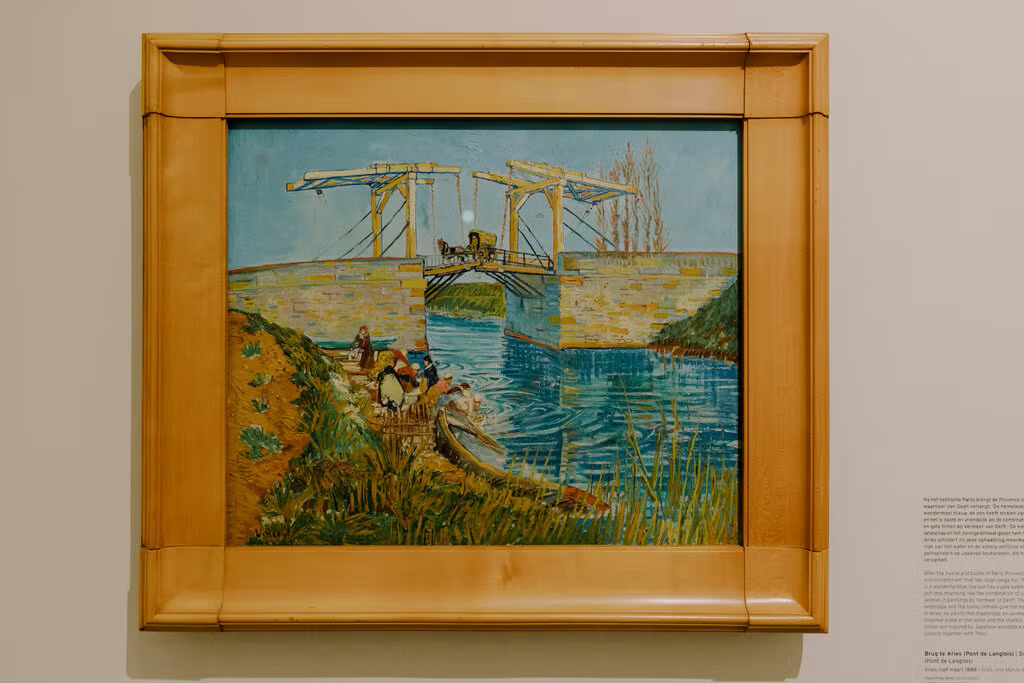
“Bridge at Arles” Credit...Ilvy Njiokiktjien for The New York Times
Kröller-Müller’s collecting philosophy was largely shaped by the art historian Henk Bremmer, with whom she took an art appreciation class, Tervaert said. She added that for Bremmer, the key component of good art was that it made the viewer feel an emotion or experience something spiritual.
Kröller-Müller went looking for art that stirred her spirit and found van Gogh.
Rovers said that van Gogh was not well regarded in the early 20th century. “If the general public knew him at all, they really considered him a madman who could not paint,” she said.
But because van Gogh had been a preacher before becoming an artist, Kröller-Müller regarded him as a man who had found a connection to faith through his art.
“She understood his wish to transcend suffering, and his aim to use art to transcend suffering,” Rovers said.
While most collectors in the Netherlands were buying old masters and 19th-century Dutch painting, Kröller-Müller focused on Cubism, Pointillism and De Stijl artists, including Piet Mondrian, Fernand Léger and Pablo Picasso.
Van Gogh’s work dominated the collection for a simple reason, Rovers said: He “stood at the cradle of the beginning of avant-garde art.” Kröller-Müller built a collection, Rovers added, “that could show the broad variety of his work — landscapes, portraits, cityscapes.”
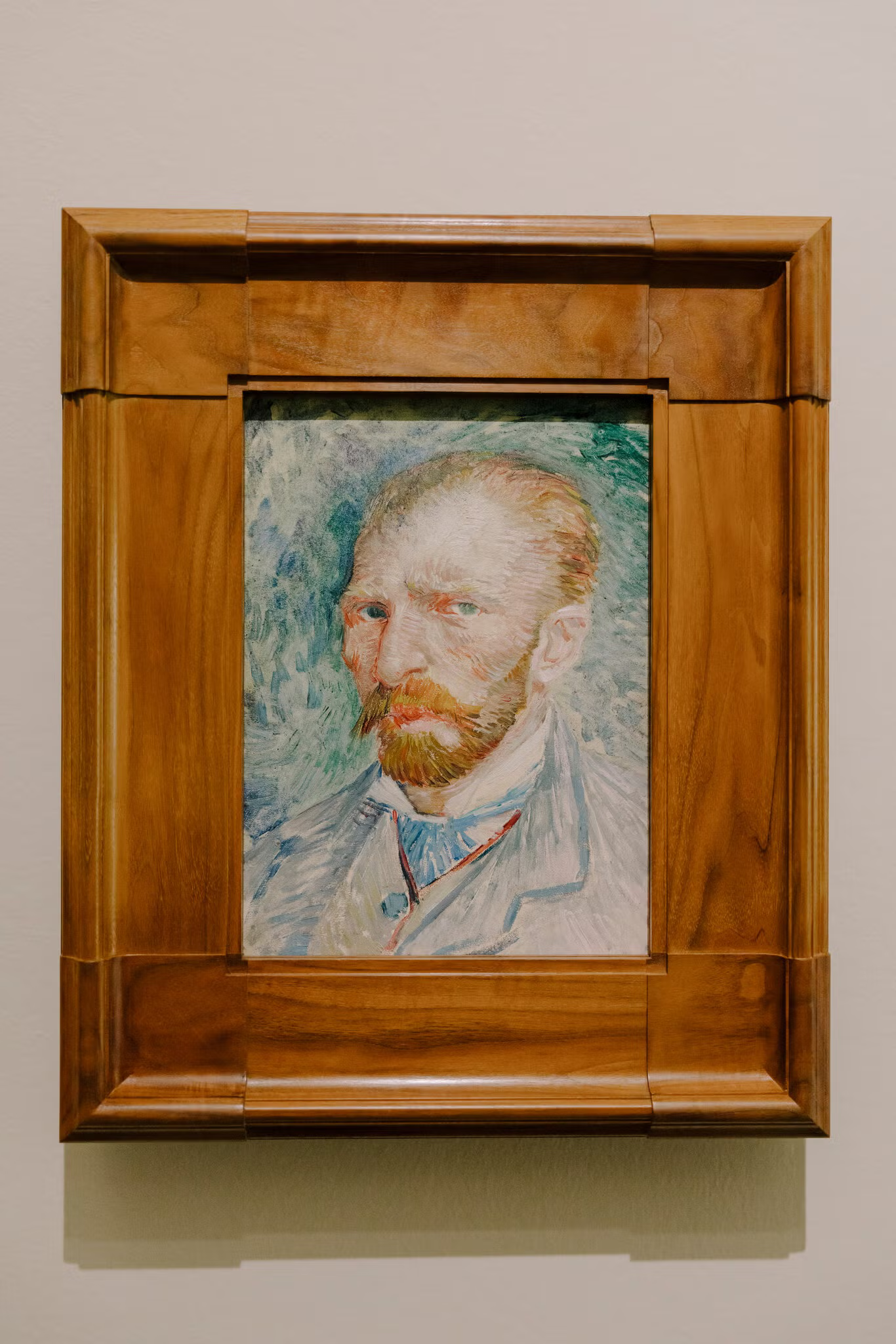
A van Gogh self-portrait from 1887. The show is organized around the themes of faith, hope and love. Credit...Ilvy Njiokiktjien for The New York Times
In the late 1930s, as Europe was approaching World War II, Kröller-Müller’s health was declining, along with her family fortune.
She decided to offer her art collection, worth about 4 million guilders at the time, along with family property in the Veluwe forest, to the Dutch state, as long as it would agree to build a museum to display it. She imagined the museum, with a 62-acre sculpture garden, as a retreat for spiritual and philosophical inquiry.
The result was a rare trove in a remote Dutch forest — now a national park — built around her collection.
The Van Gogh Museum in Amsterdam has more than 200 paintings, but its collection has a different history: It was established to show the collection of the van Gogh family, who owned the artist’s unsold works. The Kröller-Müller represents a collector’s eye.
“The Van Gogh Museum is just what was left over,” Tempel said. “This is a chosen collection.”
The New York Times
Almanya Başbakanı’na destek benzeri görülmemiş seviyeye geriledi: Yüzde 10https://turkish.aawsat.com/d%C3%BCnya/5325023-almanya-ba%C5%9Fbakan%C4%B1%E2%80%99na-destek-benzeri-g%C3%B6r%C3%BClmemi%C5%9F-seviyeye-geriledi-y%C3%BCzde-10
Almanya Başbakanı’na destek benzeri görülmemiş seviyeye geriledi: Yüzde 10
Almanya Başbakanı Friedrich Merz. (Reuters)
Almanya Başbakanı Friedrich Merz’e yönelik destek bir kez daha geriledi. ARD’nin yayımladığı son ankete göre Almanların yalnızca yüzde 10’u Merz’in performansından “memnun” veya “çok memnun” olduğunu belirtti. Bu oran, 1997’den bu yana gerçekleştirilen ankette bir Alman başbakanı için ölçülen en düşük destek seviyesi oldu.
Dün yayımlanan ankete göre katılımcıların yüzde 88’i başbakandan “pek memnun olmadığını” veya “hiç memnun olmadığını” söyledi. Şarku’l Avsat’ın edindiği bilgiye göre Merz’in eylül başındaki destek oranı ise yüzde 13’tü.
Infratest dimap tarafından 1bin 303 seçmenin katılımıyla gerçekleştirilen anket, Merz’in partisi Hristiyan Demokrat Birlik (CDU) açısından da olumlu bir tablo ortaya koymadı. Gelecek pazar genel seçim yapılması halinde CDU ve Bavyera’daki müttefiki Hristiyan Sosyal Birlik’in (CSU) oyların yüzde 20’sini alacağı öngörüldü.
Aşırı sağcı Almanya için Alternatif (AfD) partisinin oy oranı ise değişmeyerek yüzde 27 seviyesinde kaldı. Yeşiller yüzde 16 ile onları izlerken, Sosyal Demokrat Parti (SPD) yüzde 13’te kaldı.
Sol Parti’nin oy oranı yüzde 11 olarak ölçülürken, iş dünyasını destekleyen Hür Demokrat Parti (FDP) yüzde 4’te kaldı. Bu oran, partinin Federal Meclis’e girmek için gereken yüzde 5’lik seçim barajını aşamayacağı anlamına geliyor.
لم تشترك بعد
انشئ حساباً خاصاً بك لتحصل على أخبار مخصصة لك ولتتمتع بخاصية حفظ المقالات وتتلقى نشراتنا البريدية المتنوعة